





How Cashouts Move From Request To Delivery
You tap the cashier, you pick a method, you enter the amount, and you hit confirm. That part feels instant. The next part is where the waiting starts, because there are two layers doing work: the platform review and the payment route delivery.
Say you are on your sofa in Perth and your Wi-Fi is stable. You submit a request, then you see a status like "in review" or "processing." That is not the same as "sent." It means the platform is checking basics: method eligibility, limits, account consistency, and whether anything looks out of pattern for your profile.
Then comes the handoff. Once approved, the payout travels through your chosen route. Banks can take longer. Wallet services may move faster. Digital coin transfers depend on confirmations and network load. So the same request can feel different week to week even when you did everything right.
One more thing people forget: your own actions can stretch the timeline. If you edit your profile, switch devices, cancel and resubmit, or keep swapping payment routes, you add friction. Not as punishment. Just as a side effect of safety checks.
Confirming Details On Mobile
Suppose you are on a bus and your battery is at 9%. You open the cashier and rush. That is the moment to pause for ten seconds and check the destination details. If it is a wallet address, verify the first and last characters. If it is a bank-linked route, confirm the name matches your profile.
Then confirm once. One clean confirmation beats frantic tapping. And if the app stutters, do not submit again until you check your transaction history to see whether the request already exists.
Why One Clean Request Beats Five Edits
You submit, you change your mind, you cancel, you submit again, you tweak the amount, you cancel again. It feels active, like you are fixing it. In reality, each change can restart a queue position or trigger another review cycle.
Say you spotted a mistake after submitting. Instead of canceling immediately, open support chat and ask one direct question: should you cancel, or should you leave it pending while they check? That saves time, and it keeps a clear trail.
What Shapes Your Payout Timing In Australia
Timing is not one magic number. It is a mix of review speed, route delivery speed, and the context around your request.
Picture this: you request a payout on a Tuesday afternoon, same phone, same method you used last month, no recent profile edits. That tends to be smoother than a late-night Saturday request from a new device, on a new network, right after you changed your password and tried a brand-new route. You can feel the difference, even before anything happens.
Weekends can add delays for bank-linked routes. Public holidays can slow delivery. Network congestion can stretch confirmations for digital coins. And sometimes the platform will do a manual check when a request looks unusual compared to your past activity.
So the practical move is planning. If you need funds by Friday night, request earlier. If you are traveling across Australia, avoid submitting from a shaky hotel network right after you land. Give your account a normal-looking session first, then request later.
And keep your expectations calm. You are not buying coffee. You are moving funds through systems built to prevent mistakes and abuse. The fastest cashout is the one you set up for success days before you submit.
Picking A Payment Route That Matches Your Patience
Your payout method is not just a button. It is a rhythm. Pick the rhythm you can live with, then stick to it long enough to build a clean history.
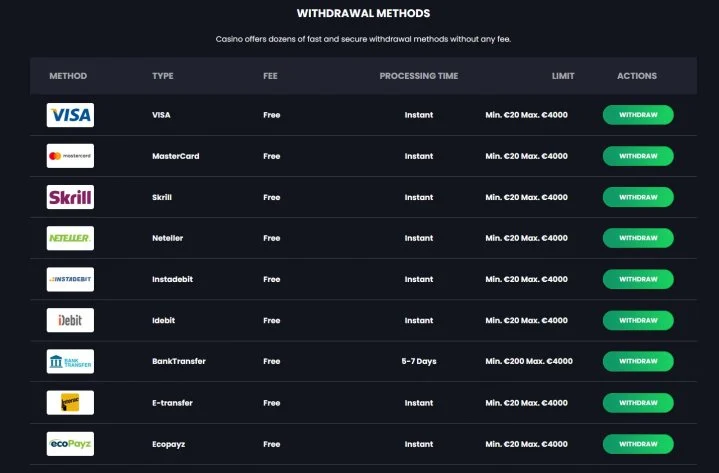
Say you are the kind of player who likes predictable delivery, even if it is slower. A bank-linked route might suit you. If you want speed and convenience on mobile, a wallet service might feel better. If you care about control and you are comfortable checking confirmations, digital coins can be a fit.
But do not method-hop every time you read a comment online. Stability matters. When your account stays consistent, reviews tend to stay simpler.
Below is a practical comparison people use when choosing how to cash out. It is not a promise of exact timings. It is a way to pick what matches your habits.
Route Type | Review Feel | Delivery Pace | Best For | Common Tripwire |
|---|---|---|---|---|
Bank Card Or Bank-Linked | Often smooth on repeat use | Depends on bank timing | Regular smaller requests | Weekend cutoffs, bank rules |
E-Wallet Service | Clean on mobile, fewer steps | Steady, sometimes faster | Convenience and repeat use | Wallet limits, login security |
Digital Coin Transfer | Can be quick after approval | Confirmation-based | Control and flexibility | Wrong network or address |
Bank Transfer | Slower, batch-based | Business-day pace | Planned larger payouts | Cutoff times, extra checks |
Card And Bank Methods
Suppose you finish a session on a Thursday and want money out before the weekend. A bank-linked route can work, but timing can depend on your bank's processing windows. Request earlier in the day, and avoid last-minute requests late on Friday.
Also keep your bank profile clean. If the name or details do not match, that mismatch can cause rejection or review. Fix mismatches on a calm day, not right before you request.
E-Wallets For Faster Handling
You are out for dinner, you want to check your status quickly, and you do not want to deal with bank cutoffs. Wallet services can feel simpler on a phone: fewer fields, fewer steps, faster confirmation screens.
But protect the wallet. Use a strong password. Use app locks. And avoid logging in on shared devices. A compromised wallet is a bigger headache than a slow bank route.
Digital Coins And Network Confirmations
Say you are comfortable with crypto transfers and you like seeing confirmations. Digital coin payouts can be fast after approval, but they are sensitive to network choice and congestion.
Double-check the network every time. And never paste an address while distracted. Do it seated, on stable internet, with your eyes open. That is how you keep control.
Account Checks And Document Requests Without Stress
Sometimes a request triggers a verification step. It can happen when you change devices, change methods, request a larger amount than normal, or update profile details. It is not a scandal. It is a safety gate.
You open the cashier, you see a prompt asking for documents, and your first instinct is frustration. Slow down. Submit what is requested, make sure the images are clear, and keep everything consistent with your profile.
Say you recently moved house in Australia and you updated your address. Good. But if you updated it today and requested funds five minutes later, expect extra review. Better habit: update details on a quiet day, wait a bit, then request later.
If a document is rejected, do not spam uploads. Ask support what exact issue they saw: glare, cut edges, wrong type, mismatch. Then resubmit once, cleanly.
A Simple Profile Consistency Checklist
Suppose you want fewer checks going forward. Keep this checklist tight: same name format across profile and payment route, the same phone number you actually use, and an email you can access quickly.
Then keep your account private. No sharing logins. No "my friend will try a slot." Shared access can look like a takeover attempt and slow reviews when you want speed most.
Promo Balance, Wagering Rules, And Why Funds Lock
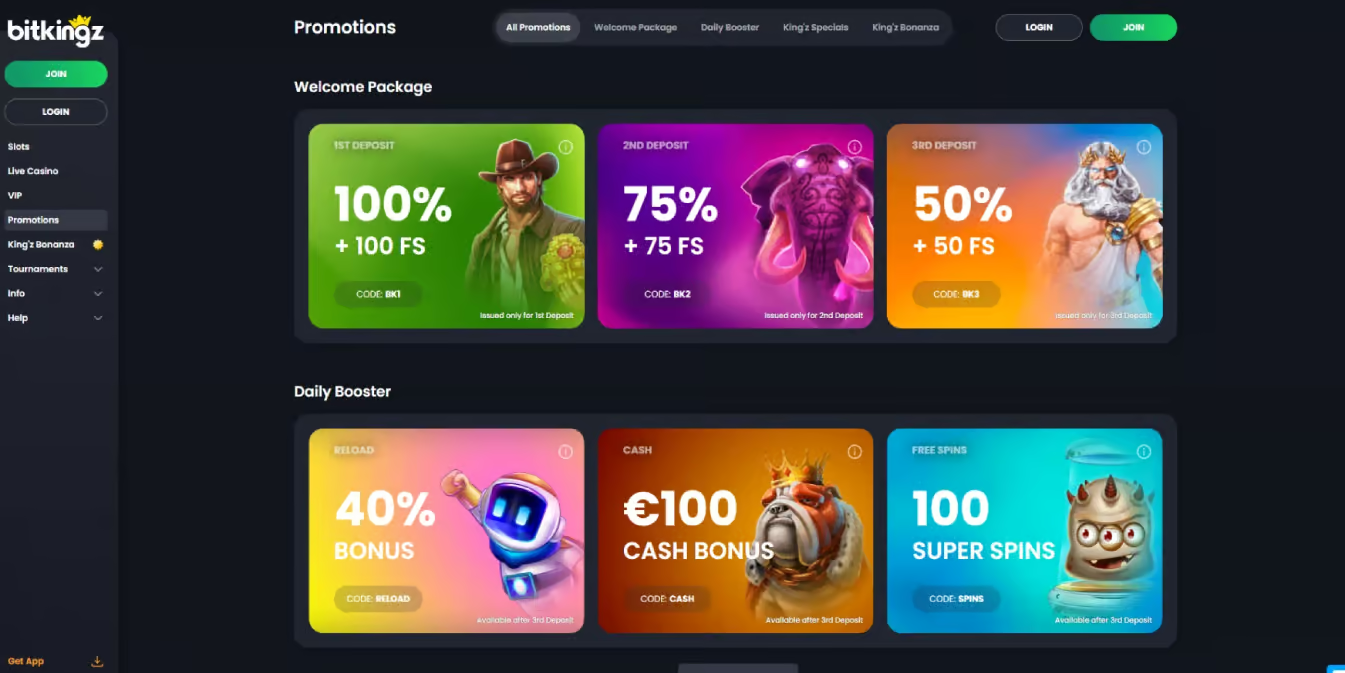
You see a big balance and you assume it is all ready for payout. Sometimes it is not. Promotional offers can lock part of your funds until certain requirements are met, and some games may contribute differently toward those requirements.
Say you accepted a bonus earlier in the week and you played a mix of slots and table games. Your balance might look healthy, but the eligible portion for cashout could be lower until the playthrough is completed. That gap is where confusion lives.
If you want the cleanest payout experience, run a cash-only session. No promo balance, no mixed rules, fewer surprises. If you like promos, read the key terms before you opt in: time window, stake limits while playing with bonus funds, and which games count.
And keep sessions separated. One day for promos. One day for cash. It sounds strict. It also keeps you from arguing with your own account screen at midnight.
Fixing The Most Common Cashout Problems
Most issues are not mysterious. They come from rushed requests, unstable connections, mismatched details, or people trying to force speed by canceling and resubmitting.
Say your status shows pending. First, check whether the request is in your transaction history. If it is there, leave it alone for a while. Refreshing every ten seconds only raises your stress. It does not move queues.
If the request fails instantly, look for limits. Minimum amounts. Maximum per day. Method availability. Then try again later on stable internet. If it fails twice with the same message, stop and contact support with the exact wording and timestamp.
If you are traveling, keep in mind that new networks and new locations can trigger extra checks. That is why it is smart to request from a familiar environment when possible.
Pending Status And Queue Anxiety
Suppose you submitted a request, then you keep checking it while cooking dinner. Ten minutes later you are annoyed. That irritation makes people do dumb stuff like canceling a perfectly fine request.
Do this instead: note the request time, take one screenshot, then check again later. If it stays pending longer than you expected, message support once with the timestamp and the method type. One message. One thread.
Failed Request Messages And Next Steps
You hit submit and the app throws an error. Do not panic. Close the cashier, reopen it, and check your internet connection. Then check your limits and details.
If you still get the same error, capture it. Screenshot, timestamp, and the method you used. Support cannot fix "it did not work" but they can fix "error text + time + method."
Support Messages That Get Real Answers
Support is a tool. Use it like a tool. Short, factual, specific.
Say you open chat and type a long story about your day, your mood, and how you feel the request should be faster. That does not help. What helps is data: request time, amount, method type, current status, and a screenshot.
Also keep context in one place. Do not open five tickets for the same request. It splits the conversation across agents and slows everything down.
If you get a vague reply, ask one focused follow-up. "Should I cancel the request?" or "Which detail is failing validation?" Focus pulls clarity.
What To Send In Your First Ticket
Suppose you are messaging from your phone while waiting for a coffee. Send this and stop: request timestamp, method type, amount, and the status text you see. Add one screenshot.
Then wait for a reply window. The fastest way to get ignored is flooding the chat with repeated messages.